How to Choose Running Shoes: A Complete Guide for Runners
Choosing running shoes? Learn about cushioning, fit, running surfaces, shoe types and what to consider before buying your next pair.
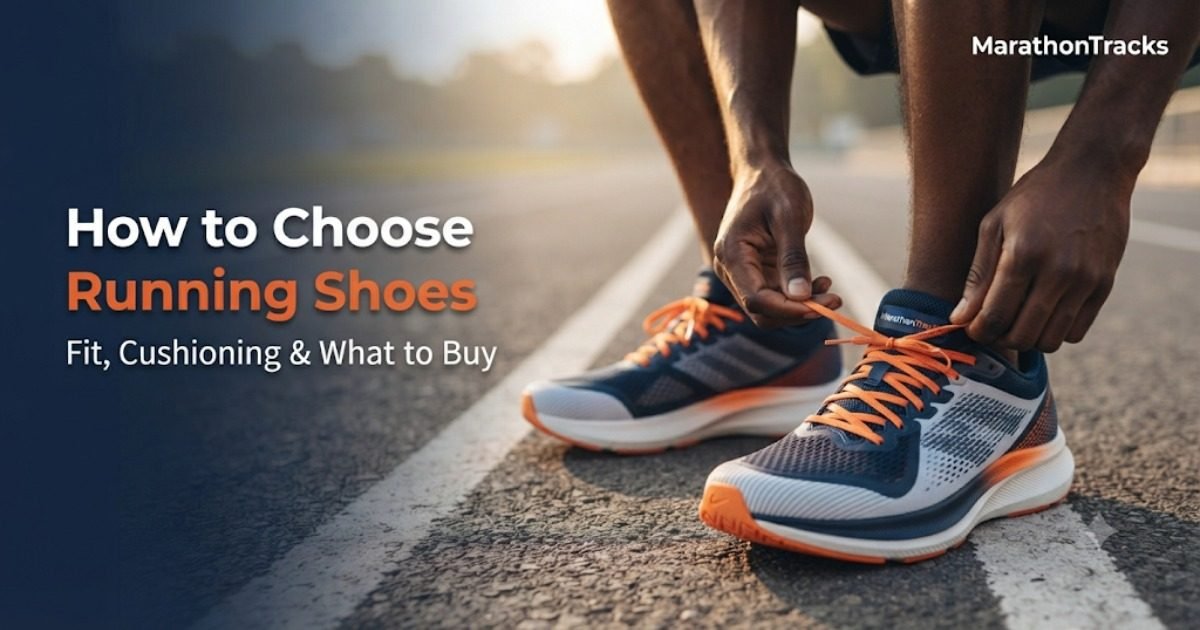
Running shoes are one of the first things most runners purchase, but choosing the right pair can feel overwhelming.
With so many brands, models, technologies, cushioning options and price points available, it's easy to spend more than necessary or select shoes that don't suit your needs.
The good news is that you don't need the most expensive running shoes to enjoy running. Comfort, fit and suitability for your running environment are often the most useful starting points.
1. Understand the different types of running shoes
Running shoes are generally designed for different running environments and preferences.
| Shoe type | Best suited for |
|---|---|
| Road running shoes | Roads, paved surfaces and urban running |
| Trail running shoes | Trails, uneven terrain and dirt paths |
| Lightweight running shoes | Faster running and some race conditions |
| Cushioned running shoes | Runners who prefer softer cushioning |
| Stability-oriented shoes | Runners who prefer additional support features |
These categories overlap, and shoe selection should depend on comfort, fit and your individual requirements.
2. Choose shoes based on where you run
If most of your running takes place on roads, sidewalks or paved paths, road running shoes are usually the most practical choice.
If you frequently run on trails, uneven terrain or rocky surfaces, trail running shoes may provide more suitable grip and protection.
Think about where you run most frequently rather than buying shoes for an occasional activity.
3. Focus on comfort and fit
Comfort should be one of your priorities when buying running shoes.
Consider the following:
- Your toes should have enough space.
- The shoe should feel secure around your heel.
- Your feet shouldn't feel squeezed.
- You shouldn't experience uncomfortable pressure points.
- The shoes should feel comfortable while walking and jogging.
Try shoes later in the day when your feet may be slightly more swollen, and consider the socks you'll normally use for running.
4. Understand cushioning
Running shoes come with different cushioning levels.
Some runners prefer softer, highly cushioned shoes, while others prefer firmer or more responsive shoes.
There isn't one cushioning type that's best for every runner.
The best choice depends on your comfort, running experience, training volume, preferences and any relevant physical considerations.
5. Should beginners buy expensive running shoes?
Not necessarily.
A beginner can comfortably start running in an affordable, well-fitting pair of running shoes.
Expensive shoes may offer specific materials, features or performance characteristics, but higher prices don't automatically mean better suitability.
Consider your budget and try several options before deciding.
6. When should you replace your running shoes?
Running shoe lifespan depends on the shoe, runner, surface, mileage and usage.
Rather than relying only on a fixed kilometre number, pay attention to:
- Visible outsole wear.
- Damaged or compressed cushioning.
- Changes in comfort.
- Persistent discomfort that may be associated with your shoes.
- Reduced traction.
Keep track of your shoe mileage if you run regularly.
7. Common running shoe buying mistakes
Avoid these mistakes:
- Buying shoes solely because they're popular.
- Choosing a shoe based only on online reviews.
- Buying the wrong size.
- Ignoring comfort.
- Wearing brand-new shoes in a race.
- Assuming the most expensive shoes are the best.
- Buying trail shoes when most of your running is on roads.
8. Build your running gear gradually
Apart from shoes, most beginner runners need very little equipment.
You can gradually add a running watch, hydration belt, cap, sunglasses and other accessories as your training evolves.
Start with the essentials and avoid purchasing equipment you may not use.
Find your next running event
Once you've found your comfortable running shoes, put them to use. Explore upcoming running events on MarathonTracks and find a race that matches your fitness and goals.